
Author Archive: admin
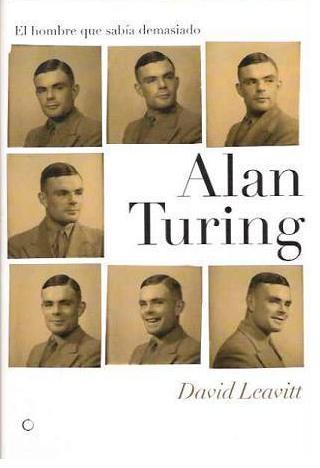
The Man Who Knew Too Much. Alan Turing and the Invention of the Computer
Title: The Man Who Knew Too Much. Alan Turing and the Invention of the Computer
Author: David Leavitt
Publisher: Antoni Bosch
ISBN: 9788495348302
Review: Prosecuted by authorities and his colleges, British mathematician Alan Turing committed suicide back in 1954 when he ate a cyanide poisoned apple. He was the pioneer in Pure Mathematics field, the mastermind to crack the Enigma code used by Nazi Germany to send its encrypted orders, father of ideas that contribute to the computer invention, openly homosexual against the social convictions of that time and even the law, eccentric and brilliant character who was a victim of naivety and frankness.
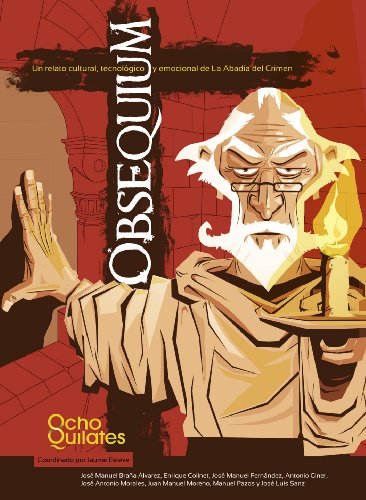
Obsequium. Un relato cultural, tecnológico y emocional de La Abadía del Crimen
Original Title: Obsequium. Un relato cultural, tecnológico y emocional de La Abadía del Crimen
Author: Jaume Esteve Gutiérrez
Publisher: OCHO QUILATES
ISBN: 9788461695355
Review: There is no game from the Golden Era of Spanish software which stirs debate more than The Abbey of Crime, and Obsequium was written in order to provide its followers – and why not? Also its detractors -, enough elements to be able to study this game from different approaches. What was the background when the game was launched? Was it a good adaptation of The Name of the Rose? Why Juan Decán fought so hard to include this controversial camera system? Was the code set by Paco Menéndez a brilliant idea or a nonsense in binary code? How was it received by the press? And among gamers? How far has come its legacy in videogames and social fields? These and other questions will be discussed here. This book was coordinated by Jaume Esteve, also José Manuel Braña Álvarez, Enrique Colinet, José Manuel Fernández, Antonio Giner, José Antonio Morales, Juan Manuel Moreno, Manuel Pazos y José Luis Sanz have contributed to the elaboration of the text
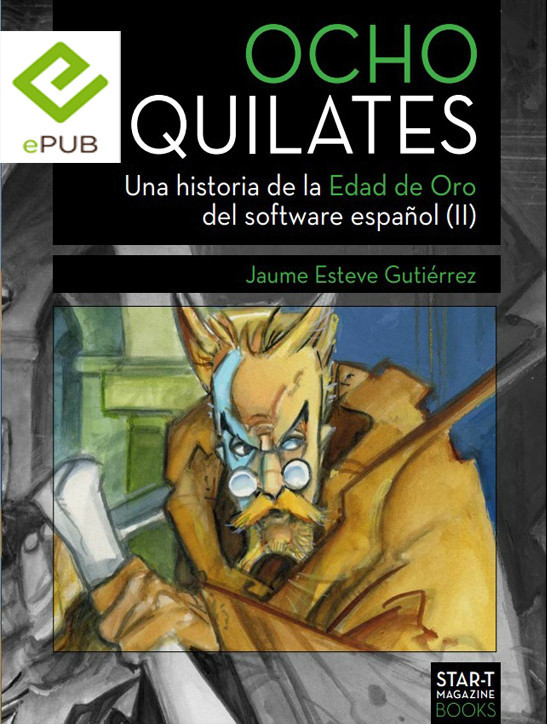
Ocho Quilates (Una historia de la Edad de Oro del software español (1987-1992)) (II)
Original Title: Ocho Quilates (Una historia de la Edad de Oro del software español (1987-1992)) (II)
Author: Jaume Esteve Gutiérrez
Publisher: STAR-T MAGAZINE BOOKS
ASIN: B009XUDMC6
Review: Did you know that twenty years ago Spain was one of the main videogame powers in Europe? “Ocho Quilates, Una historia de la Edad de Oro del software español (1983-1986) (I)” is an overview over the origins of Spanish videogame industry in times of 8-bits.You may remember the 80s as the years of Nocilla sandwich after school, Naranjito, The A-Team and Mecano. But 80s was also an historical point in videogame’s world. It was the time when they started to evolve into the huge beast that we know today thanks to 8-bits microcomputers as ZX Spectrum, Amstrad CPC, MSX, or Commodore 64. Surrounding this technological mess a beardless bunch of young men (and some just a little older) built up a nonexistent industry at that time. Companies such as Dinamic, ERBE, Made in Spain, Opera and Topo won a place in the hearts of an entire generation of Spaniards who found that computers were more than a tool to do their homework. If your hair stands on end when you hear talking about La Abadía del Crimen, Navy Moves, Mad Mix Game, Livingstone, Supongo, La Aventura Original, Abu Simbel Profanation, Silent Shadow, Sir Fred, La Pulga, Mot, Lorna, El Misterio del Nilo, After the War, Emilio Butragueño o Fernando Martín. Or if tears come to your eyes when someone mentions Afteroids, Army Moves, Fred, Goody, Desperado, Narco Police, Risky Woods, Rocky, Perico Delgado, Humphrey o París – Dakar, welcome, you are at home.
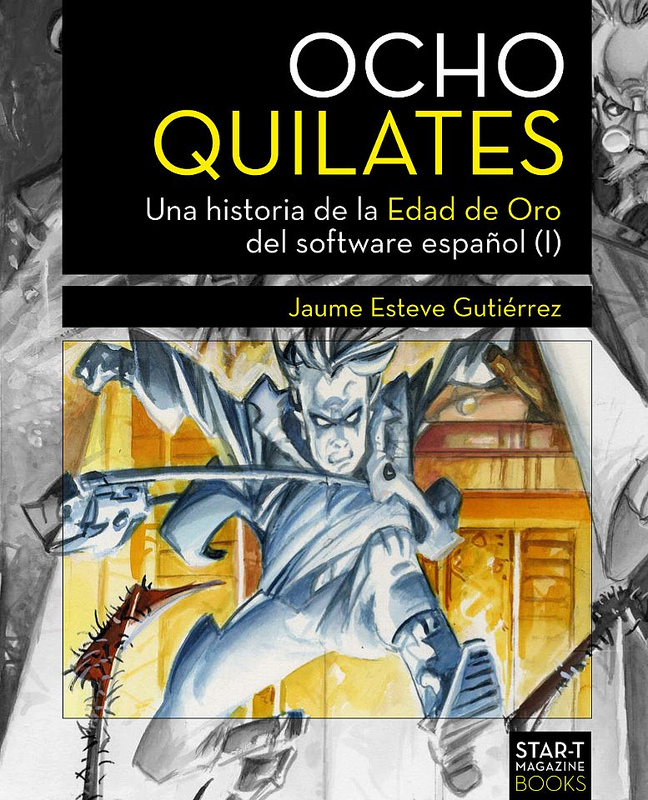
Ocho Quilates (Una historia de la Edad de Oro del software español (1983-1986)) (I)
Original Title: Ocho Quilates (Una historia de la Edad de Oro del software español (1983-1986)) (I)
Author: Jaume Esteve Gutiérrez
Publisher: STAR-T MAGAZINE BOOKS
ASIN: B008FZPGTC
Review: Did you know that twenty years ago Spain was one of the main videogame powers in Europe? “Ocho Quilates, Una historia de la Edad de Oro del software español (1983-1986) (I)” is an overview over the origins of Spanish videogame industry in times of 8-bits.You may remember the 80s as the years of Nocilla sandwich after school, Naranjito, The A-Team and Mecano. But 80s was also an historical point in videogame’s world. It was the time when they started to evolve into the huge beast that we know today thanks to 8-bits microcomputers as ZX Spectrum, Amstrad CPC, MSX, or Commodore 64. Surrounding this technological mess a beardless bunch of young men (and some just a little older) built up a nonexistent industry at that time. Companies such as Dinamic, ERBE, Made in Spain, Opera and Topo won a place in the hearts of an entire generation of Spaniards who found that computers were more than a tool to do their homework. If your hair stands on end when you hear talking about La Abadía del Crimen, Navy Moves, Mad Mix Game, Livingstone, Supongo, La Aventura Original, Abu Simbel Profanation, Silent Shadow, Sir Fred, La Pulga, Mot, Lorna, El Misterio del Nilo, After the War, Emilio Butragueño o Fernando Martín. Or if tears come to your eyes when someone mentions Afteroids, Army Moves, Fred, Goody, Desperado, Narco Police, Risky Woods, Rocky, Perico Delgado, Humphrey o París – Dakar, welcome, you are at home.
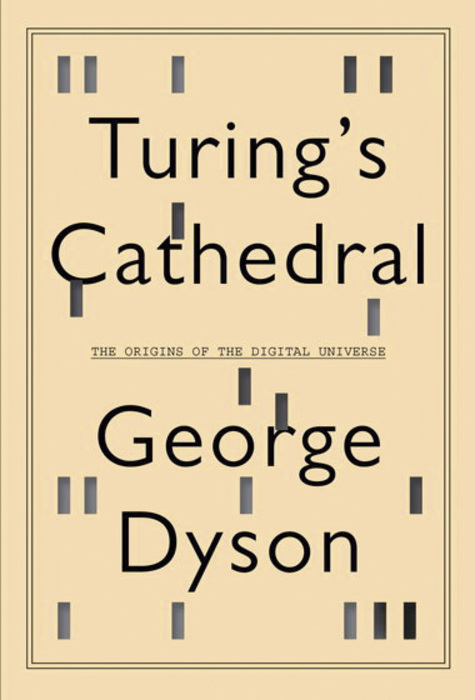
Turing’s Cathedral
Title: Turing’s Cathedral
Author: George Dysson
Publisher: DEBATE
ISBN: 9788499922508
Review: : “It is possible to invent a single machine which can be used to compute any computable sequence” a 24-year-old Alan Turing announced in 1936. A small group of men and women met in Princeton, New Jersey, around the 40s and 50s. They were led by John Von Neumann, and their common goal was to build one of the world’s earliest computers which would materialise the vision of Alan Turing about a universal machine. Codes generated inside this 5-kilobytes embryo of universe (less storage than a single screen icon from a present-day computer needs) began to distinguish between numbers meaning things, and numbers doing things, and then our universe was forever changed. Turing’s Cathedral tells the story of how the most constructive invention of 20th century, digital computer, was built and who were its creators. A prophetic and historical narrative which describes how that code succeed in conquering the world and presents the future of digital world.