The UPV Computer Museum Brings the History of Computing to Life Through Art and Design

The Computer Museum, located at the School of Informatics Engineering (ETSINF) of the Universitat Politècnica de València (UPV), is strengthening its mission to preserve and promote technological heritage through two new initiatives that bring the history of computing closer to the university community and the general public: an outdoor mural dedicated to the evolution of the field, and a revamped exhibition on the Turing Award winners.

A Mural to Increase the Visibility of the Computer Museum

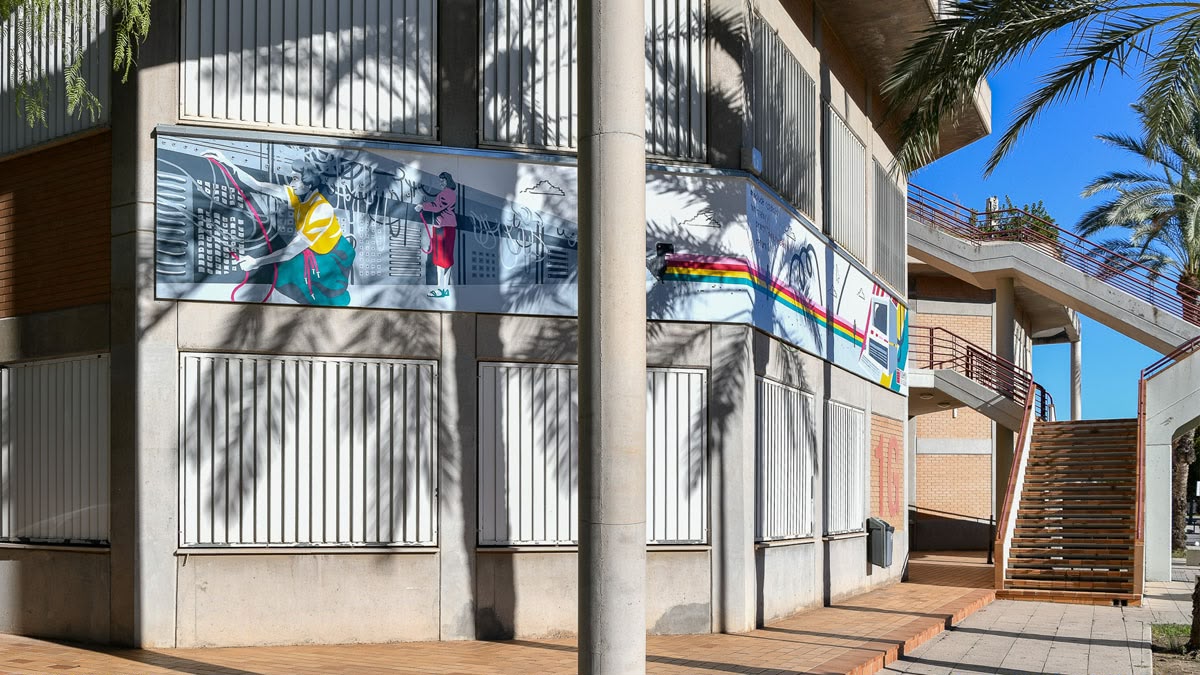
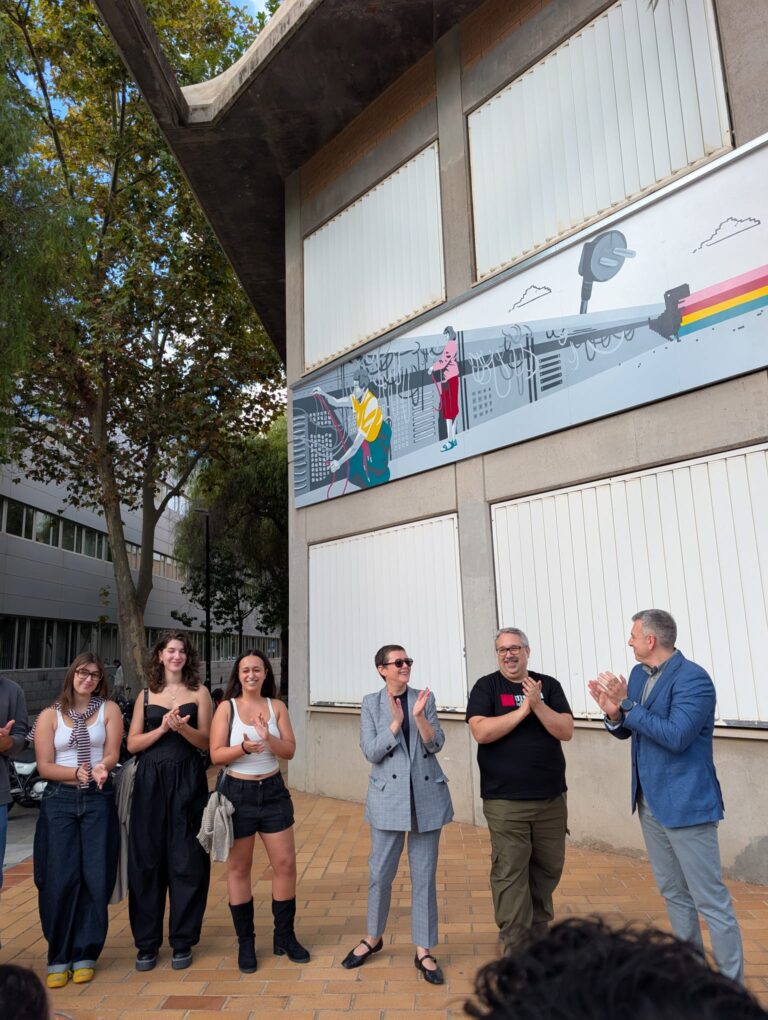
Located on the exterior façade of Building 1G, the mural serves as an invitation to discover the Computer Museum and the heritage it preserves. This artistic intervention extends the history of computing beyond the museum’s walls, integrating it into the everyday spaces of the School and sparking the curiosity of those who pass through its facilities.

The project is the result of a collaboration between the Computer Museum and the UPV’s San Carlos Faculty of Fine Arts. The selected design was created by **Alba Granell Mateo**, a student in the Master’s program in Artistic Production at the Universitat Politècnica de València.

The initiative was developed as part of the course *Painting and Environment* (*Pintura y Entorno*), taught by professors Juan Canales and Álvaro Porras. During a visit to the Museum, the students explored its collections, finding inspiration for their artistic proposals within the technological heritage on display.

The composition offers a visual journey through various stages in the history of computing—from the massive computer systems of the early decades to the arrival of computers in the home. This narrative reflects the profound transformation undergone by technology and its gradual integration into daily life. Furthermore, by highlighting the women involved in the early days of computing, the mural helps to acknowledge their vital role in the development of the field. The mural thus serves as an outreach tool that reinforces the Museum’s visual identity, raises awareness of its existence, and encourages people to learn about the equipment, stories, and technological advancements that make up its collections.

The Turing Award Exhibition: Icons in the History of Computing

The second project involves the renewal of an exhibition dedicated to recipients of the Turing Award—one of the most significant international honors in the field of computing, often regarded as the equivalent of a Nobel Prize for this discipline.

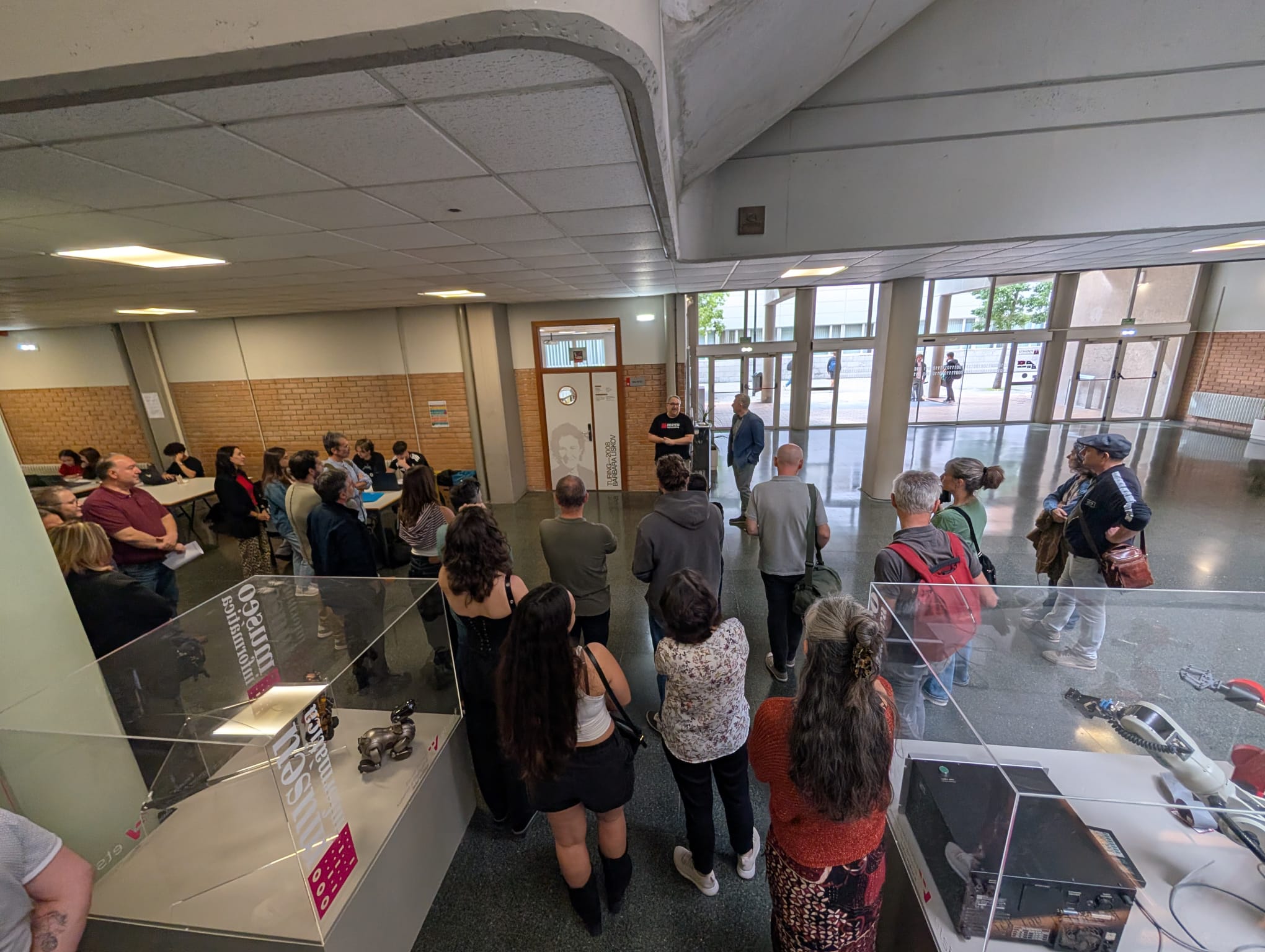
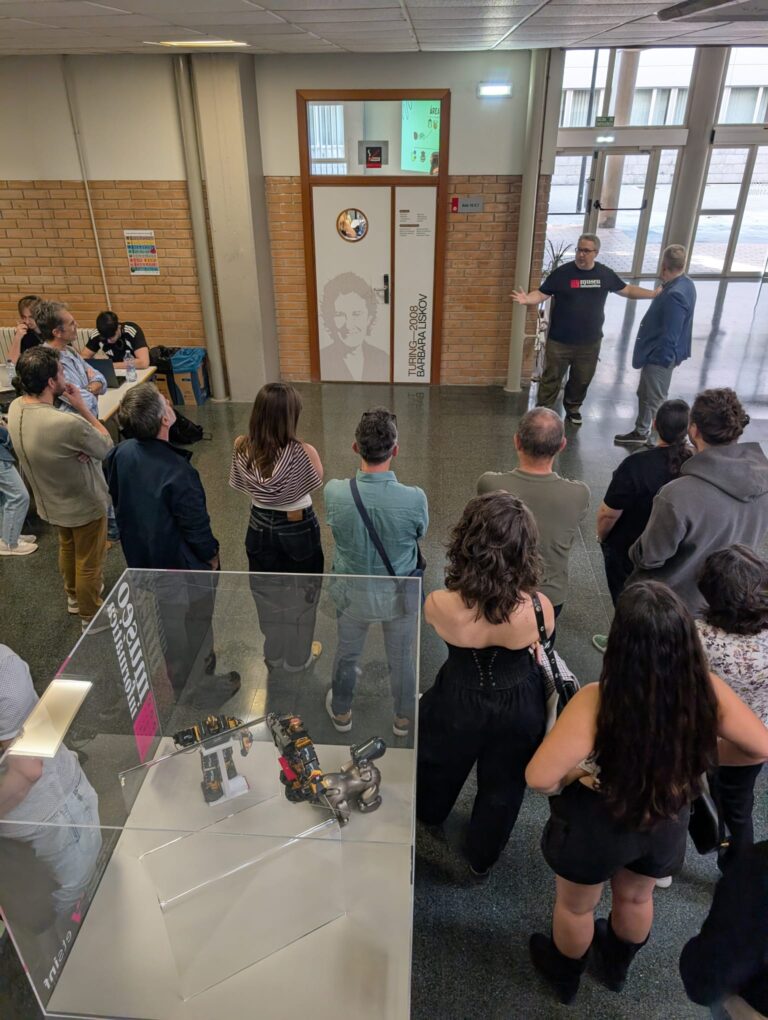
The new visual design was created by illustrator and designer **Diego Mir**, who developed a fresh look for the exhibition panels and the classroom doors in the 1G building. His work combines illustration and infographics to showcase the individuals honored with this award, making their contributions to the development of computing more accessible to the public.

A standout feature of this design is the use of portraits constructed from zeros and ones—a direct reference to binary code that links the visual treatment of the images to the very foundations of computing. This approach transforms the depiction of these key figures into a graphic expression intrinsically tied to the discipline itself.

Integrating these panels onto classroom doors allows the exhibition to become part of the daily paths taken by students, faculty, and staff at the School. In this way, these influential figures in computing gain a presence within the academic environment, helping to highlight the history and progress of a field that is constantly evolving.

The Museum of Computing as a Space for Preservation and Outreach

Both projects share a common goal: to bring the history of computing to life through new visual languages ​​and to expand the ways in which its heritage is communicated. While the mural invites people to discover the Museum from the outside, the Turing Award exhibition focuses on the individuals whose contributions have shaped the development of this science and technology. These initiatives strengthen the presence of the Museum of Computing within the daily life of the ETSINF and highlight its role as a space for the preservation, research, and dissemination of technological heritage. Furthermore, the collaboration between art, design, and computing demonstrates that the history of this field can be communicated in ways that are diverse, accessible, and engaging for various audiences.

In this way, the Museum of Computing continues to contribute to preserving the memory of technological evolution and fostering an understanding of a history that helps shed light on both the origins of computing and its influence on contemporary society.
 

AD Adventures cover art exhibition at espai.inf

In 2026, RetróPolis Valencia celebrates its 9th edition on Saturday, April 25th. As part of the opening events, we have organized a temporary exhibition in the espai.inf space of building 1E featuring the cover art of all the original productions of Aventuras AD, a video game developer from the Golden Age of Spanish Software, based in Valencia. Aventuras AD was the only Spanish company dedicated exclusively to the text adventure genre. The exhibition is a historical and cultural retrospective focused on one of the key companies in Spanish video games, presented in a university setting that aims to promote the relationship between technology and digital culture.


Inauguration of the Cii Honeywell Bull mainframe at the UPV Computer Science Museum

Next Wednesday, July 9, 2025, the inauguration ceremony will take place for one of the most emblematic pieces of our university’s technological heritage: the Honeywell Bull CII mainframe, recently incorporated into the Computer Science Museum thanks to a generous donation from ArcelorMittal.

This computer system, over seven meters long, represents a milestone in the history of computing and has been carefully restored with the collaboration of the UPV’s Art and Heritage Fund. Its installation and restoration have been made possible thanks to the collaborative work of specialist technician Alfredo Moralejo, the School of Computer Engineering, the Department of Information Systems and Computing, the Computer Science Museum itself, and with the essential support of the Vice-Rector’s Office for Art, Science, Technology, and Society.

The event will take place next:

📅 Wednesday, July 9, 2025
🕛 At 12:00 p.m.
📍 DSIC Board Room, Building 1F – Department of Information Systems and Computing – Polytechnic University of Valencia

The event program will include:

  • Opening – Vice-Rector for Art, Science, Technology, and Society and Director of the Computer Science Museum
  • Origin of the piece – Representative of ArcelorMittal
  • Mounting and characteristics – Mr. Alfredo Moralejo
  • Restoration of the piece – Art and Heritage Collection Area
  • Institutional closing ceremony – Director of the ETSINF
  • Honorary wine

Free admision until full capacity is reached.

Balance of Retropolis 2025 #RPV25

On April 12th, the Polytechnic University of Valencia hosted the latest edition of Retropolis 2025, the retrocomputing and classic video game fair that has established itself as a leading event for vintage technology and digital history enthusiasts. This year, the HP-UPV Business Chair and the Edicom Business Chair played a key role as event sponsors.

Retropolis 2025 offered a free and sustainable experience, bringing together more than 1,900 attendees—the highest number recorded to date—including adults, children, and entire families. During the event, more than 1,000 kg of food were collected for the Valencia Food Bank, also setting a charity record in the event’s history.

The public was able to enjoy exhibits dedicated to Apple computers, handheld consoles, and classic arcade games, as well as new developments for 8- and 16-bit computers, demonstrating that the retro scene is still alive and evolving. Highlights included interactive workshops, visits to the Computer Museum, free play areas, and a lively table football tournament.

Institutional participation facilitated the connection between the technology industry and academia, promoting learning and the preservation of digital heritage.

Events like Retropolis 2025 reinforce the importance of recovering collective technological memory, fostering dialogue between generations, and bringing the history of computing to new audiences.

Images: https://photos.app.goo.gl/t6tVJLtrtag2eBhM9

Temporary exhibition in space.inf

In 2025, RetróPolis Valencia celebrates its 8th edition next Saturday, April 12th, and as part of its supporting content, we have organized a temporary exhibition at espai.inf in building 1E with a historical retrospective of the posters from all editions of RetróPolis, the event organized by the ETSINF Computer Museum with the aim of disseminating, promoting, and preserving the culture of video games and classic computing. The exhibition brings together the 8 posters corresponding to the editions held between 2016 and 2025 (except for the years 2020 and 2021, in which the event was not held due to the pandemic) and has been arranged in reverse chronological order: 2025, 2024, 2023, 2022, 2019, 2018, 2017 and 2016, also displaying a collage in 3×3 board format, where the central square – with the RetróPolis logo – symbolizes the forced stoppage due to the pandemic. The exhibition can be visited until April 16.