Breaking Codes. Life and Legacy of Turing

Title: Breaking Codes. Life and Legacy of Turing.
Author: Manuel de León y Ágata Timón
Publisher: Catarata
ISBN: 9788483198858
Review:This book attempts both to draw the life of British mathematician Alan Mathison Turing, and going over his major achievements. Alan Turing was certainly one of the most brilliant Scientifics of 20th century, and his work laid the foundations of what we know today as informatics. Turing was a decisive figure in WWII, since the end of the conflict was accelerated by his cryptographic work, he breached the security of German communication breaking the codes of Enigma machines. His life was not made any easier by the fact that he was a homosexual. He was pursued and condemned for his sexuality, which clashed with strict moral codes of British society at that time. To this day, his tragic death by poisoning remains an unsolved mystery.

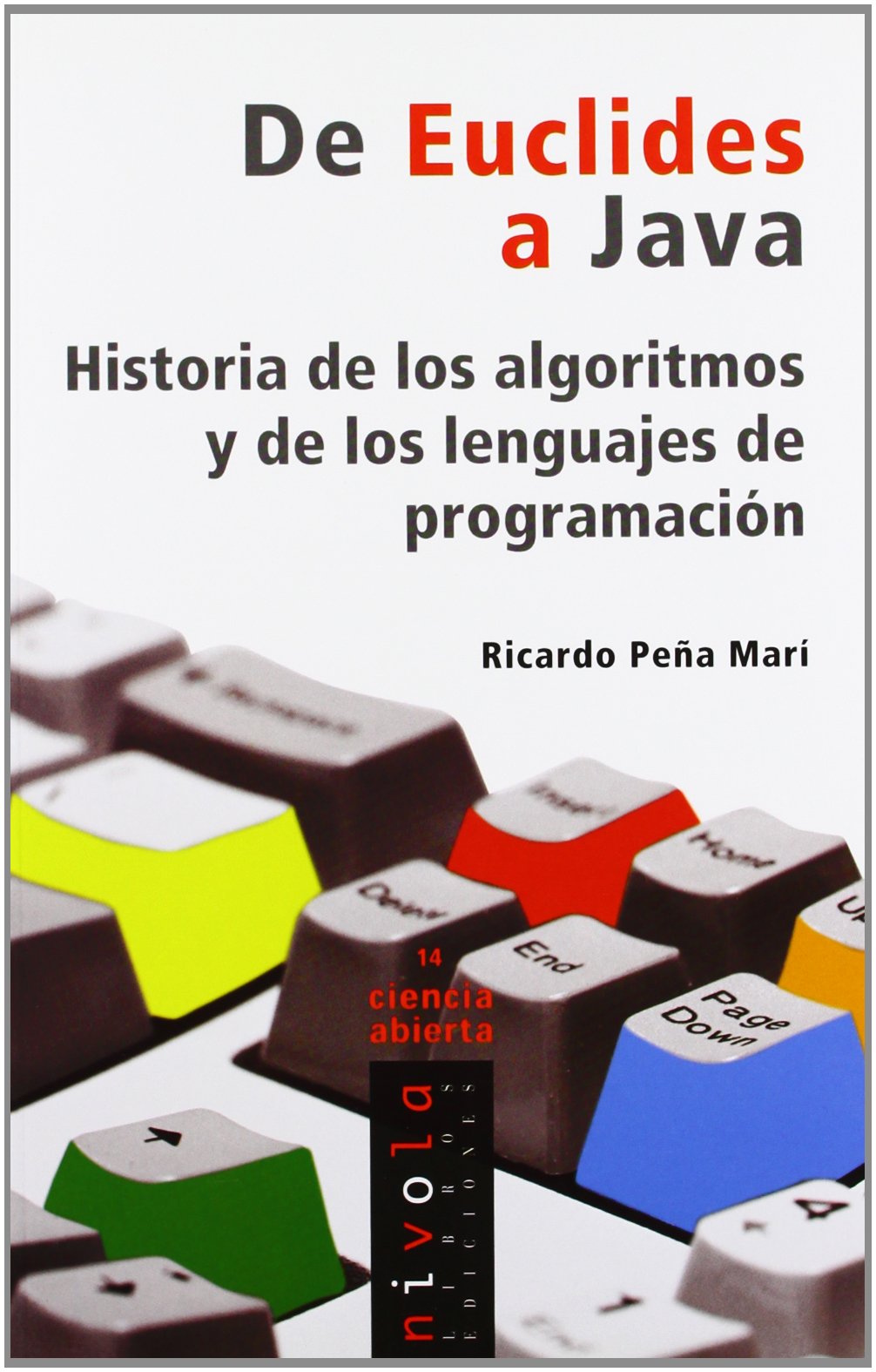
From Euclid to Java

Title: From Euclid to Java
Author: Ricardo Peña Marí
Publisher: S.L. NIVOLA LIBROS Y EDICIONES
ISBN: 9788496566149
Review: Our history is as old of humanity itself, as even back in ancient Mesopotamia algorithms were used to describe certain calculations related to commercial transactions. These algorithms together with mathematic development have always gone hand in hand. In the 17th century first mechanic tools for calculation appeared as desktop calculators, and in the 19th century first program-controlled machines were designed. However early computers, as we know them, date from the mid-20th century. From that point, algorithms reached an unprecedented level of development. This work reviews the trajectory of algorithms, focusing on more recent times. At some point, approximately around 1960, the book’s emphasis goes on to describe programming languages, which is the appropriate tool for communicate algorithms to machines that have to run them.

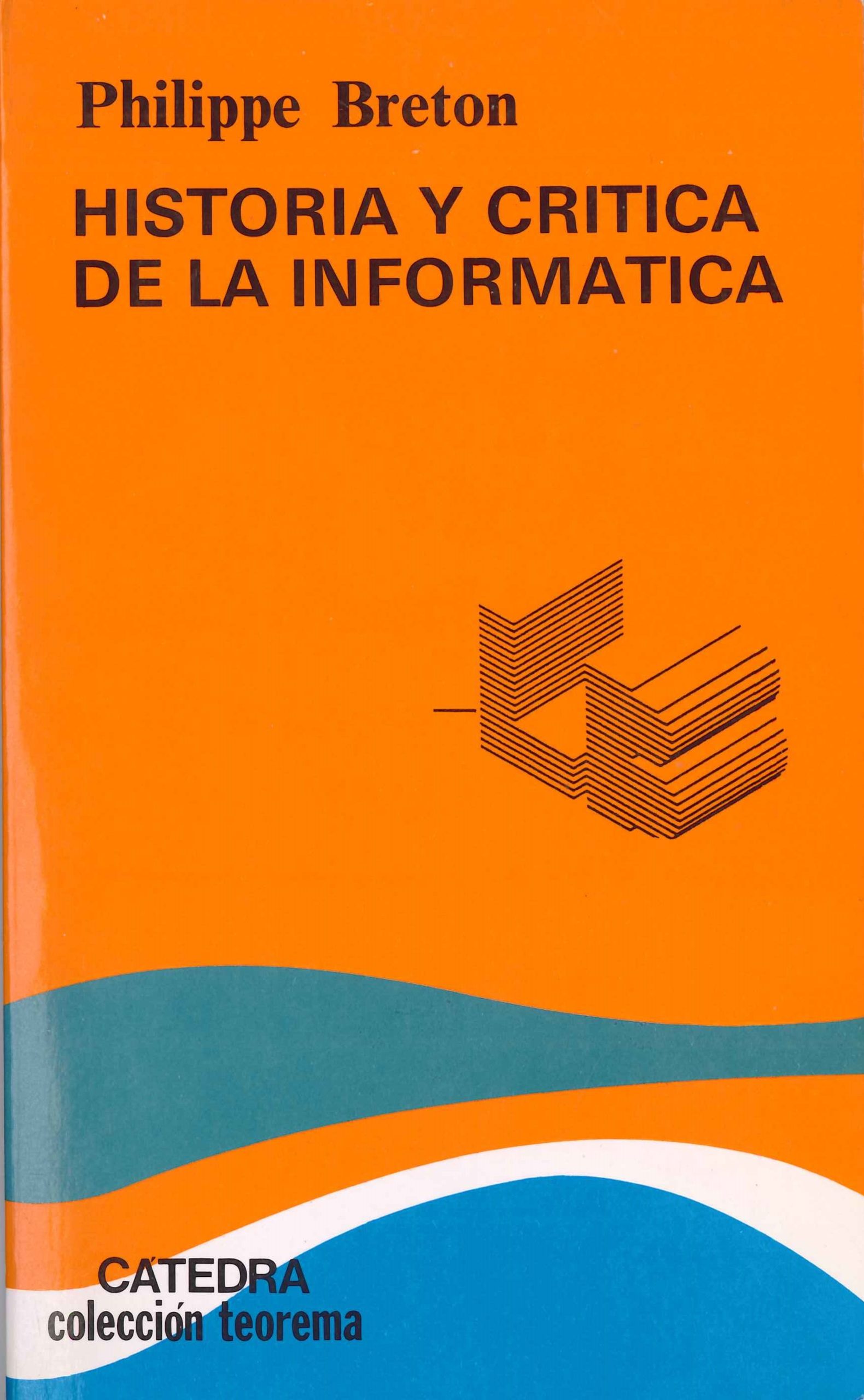
Une histoire de l’informatique

Original Title: Une histoire de l’informatique
Author: Philippe Breton
Publisher: CATEDRA
ISBN: 9788434708181
Review: How IT was born? How we have passed through Ancient dreams about fantastic creatures to such an extraordinary evolution of contemporary computers? How and how much present-day culture has change? Philippe Breton tries to find the answer to this and some other questions through a global approach to history of this technique, and a rigorous analysis of social and ethic risks that it involves. It is written for all sectors of society, it covers both technical questions from newcomer readers worried about the impact of new technology, and also concerns from the specialist who ignores his own assimilation process inside modern society. Philippe Breton is an investigator inside the Scientific Researcher and Study Group of the Louis Pasteur University Strasbourg I, he is also Computer History lecturer at Strasbourg II University as well as consultant in Communications Department at the Quebec University in Montreal.

The Innovators. How a Group of Hackers, Geniuses, and Geeks Created the Digital Revolution

Title: The Innovators. How a Group of Hackers, Geniuses, and Geeks Created the Digital Revolution
Author: Walter Isaacson
Publisher: DEBATE
ISBN: 9788499924663
Review: After his wonderful biography of Steve Jobs, Walter Isaacson tells in The Innovators the story of the people who invented the Computer and the Internet, it is a book bound to become the definite history of the digital revolution and an indispensable guide to understand all the process of innovation and who were its creators. It is the story of how their brains worked and why were they so creative, but it is also the story of how their capability to cooperate and to master the art of work together made them even more creative. In the era which promotes innovation, creativity and teamwork, The Innovators reflects how that happen.

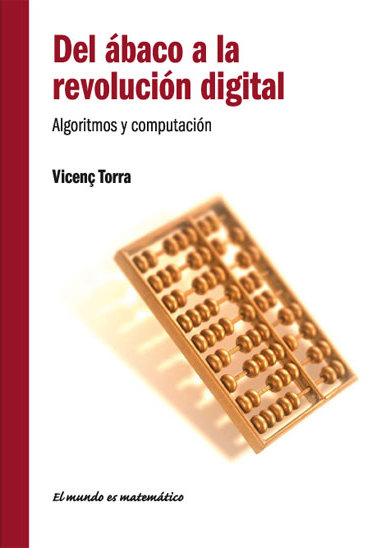
From the Abacus to the Digital Revolution

Title: From the Abacus to the Digital Revolution
Author: Vicenç Torra
Publisher: RBA LIBROS
ISBN: 9788498679908
Review: Throughout its own development, calculation tools were always the result of culture specific numbering systems and available technologies at the time. From prehistorical calculation to Roman abacus, and from Arabian algorithms to the very first calculator, history of calculation is also, to a large extent, history of numbering systems. At the end of this evolutionary process, we find computers and informatics, which were developed with the same purpose: to achieve computer tools more and more powerful in order to perform more complex calculations. Through history the evolution of calculation tools leads us from Babylon to Alexandria, from Rome to China, from Egypt to India, and over the centuries we find Ramón Llull, Charles Babbage, Turing and his Colossus…until the current computer which is already part of our daily environment.

The Thilling Adventures of Lovelace and Babbage

Author: James Gleick
Publisher: Editorial UOC
ISBN: 9788491163374
Review: The most dynamic duo in Victorian London: Charles Babbage, the accidental inventor of the computer and his colleague Ada, countess of Lovelace, a peculiar proto-programmer and daughter of Lord Byron. When Lovelace transcribed Babbage’s construction plans for a huge analytical engine machine back in 1842, she added notes three times longer than the original text. Their notes contain the first appearance of the general theory of computing, one hundred years before the real first computer was built. Sadly, Lovelace died of cancer ten years later after her work was published, and Babbage’s machines were never built.

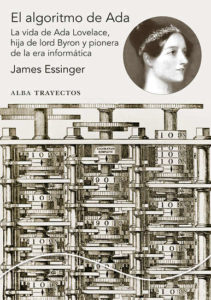
Ada’s Algorithm

Title: Ada’s Algorithm: How Lord Byron’s Daughter Ada Lovelace Launched the Digital Age
Author: James Essinger
Publisher: ALBA TRAYECTOS
ISBN: 97884-90651384
Review: 150 years after Ada’s Lovelace death, a well-known computer program was named Ada, after the one and only legitimate daughter of Lord Byron. Her crucial, but often forgotten, contribution was acknowledge in first place by mathematicians such as Alan Turing. Nowadays her work is considered groundbreaking in the digital age. Her mother, Annabella Milbanke, abandoned her husband in 1816. In her determination of moving her daughter away from ‘Byron craziness’, Ada received a really strict education focused on Mathematics in order to avoid giving free rein to his imagination. However, the young girl was already thinking about the flying machine at thirteen. At nineteen Ada knew Charles Babbage, designer of The Analytical Engine (a really sophisticate calculator), and she saw the endless possibilities of this new discovery. Her contribution was vital, in fact, as long as she was the one who distinguished between data and processing, an essential knowledge in computer science. James Essinger narrates in a detailed and entertaining manner the circumstances and development of this unusual talent flourishing in the middle of the parental fears of her stubborn mother and the legacy of her fiery father. An intimate portrait of the short but remarkable life of Ada Lovelace framed in the context of London high-class society in the nineteenth century.